July 2026 Jobs Report: The Latest Employment Trends

July’s jobs report points to a labor market that remains stable, but with increasingly limited hiring momentum.
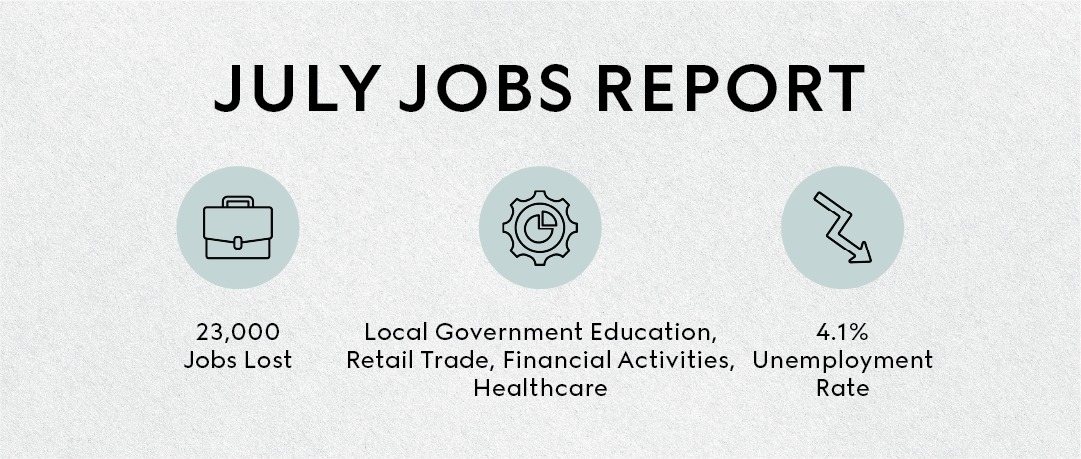
The U.S. economy lost 23,000 jobs in July, following several months of modest growth. At the same time, the unemployment rate held relatively steady at 4.1%, suggesting the decline in payrolls has not yet translated into a significant rise in unemployment.
The bigger picture, however, is becoming clearer: hiring has slowed considerably. Downward revisions to May and June also erased 103,000 previously reported job gains, indicating that employment growth heading into the summer was weaker than initially estimated.
A Softer Month For Hiring
July’s decline was driven largely by losses in local government education and retail trade, while healthcare remained one of the few major sectors continuing to add jobs.
Local government education lost 50,000 jobs, contributing significantly to the overall decline. Retail trade also shed 19,000 jobs, with losses concentrated among warehouse clubs, supercenters, and other general merchandise retailers.
Meanwhile, financial activities continued its downward trend, extending a decline that began more than a year ago. The sector has now lost 121,000 jobs since its recent peak in May 2025, with banking and insurance among the areas facing continued pressure.
Healthcare remained a bright spot, adding 22,000 jobs this month. However, even healthcare, one of the labor market’s most consistent sources of growth, is hiring at a slower pace than it did over the previous year.
Most other major industries showed little movement, reinforcing a broader theme: employers are largely maintaining their existing workforces rather than significantly expanding them.
A Stable Labor Market With Less Participation
Despite slower hiring, the unemployment picture remains relatively steady.
The unemployment rate changed little in July, while both short-term and long-term unemployment edged lower. However, temporary layoffs increased, suggesting some employers may be reducing staffing needs without making permanent cuts.
Another trend worth watching is labor force participation. While there was little change in July itself, participation has fallen since the beginning of the year, along with the share of the population that is employed.
Wage growth is also moderating. Average hourly earnings were essentially unchanged in July and increased 3.2% over the past year, signaling that wage pressures are easing alongside hiring demand.
What This Means For Employers
For employers, July’s report may create more breathing room in the talent market.
Slower hiring across the economy, combined with continued job losses in sectors like financial services and retail, could increase the availability of experienced candidates. At the same time, specialized talent in industries such as healthcare may remain more difficult to attract.
This environment gives employers an opportunity to:
- Make targeted hires while competition for talent is more measured
- Tap into experienced candidates from industries experiencing slower growth or restructuring
- Prioritize roles that directly support productivity, revenue, and long-term business needs
The key is not necessarily to hire more; rather, hire strategically. Organizations with clearly defined needs and efficient hiring processes may be better positioned to secure strong talent while competitors remain cautious.
Are you looking for top talent? Reach out to us today to get started.
What This Means for Job Seekers
For candidates, July’s report reinforces that today’s job search requires a more targeted approach.
Employers are still hiring, but opportunities are not evenly distributed across industries. Healthcare continues to show demand, while financial services, retail, and certain public-sector roles are facing greater pressure.
In a slower hiring environment, candidates can strengthen their position by:
- Focusing applications on roles that closely align with their experience
- Clearly communicating measurable results and transferable skills
- Expanding their search into industries where their expertise can solve similar business challenges
- Staying persistent as employers take more time to make hiring decisions
A negative month for payroll growth does not mean opportunities have disappeared. It does mean candidates may need to be more deliberate about where they look and how they position their experience.
Looking for your next career change? Explore our open jobs today.
For further reading, refer to the U.S. Bureau of Labor Statistics or check out our other blogs on topics related to the job market.
Get the latest updates and exclusive content – subscribe to our newsletter!
Partner with Premier today.
Where in striving to do better, we transform lives in shared partnership with our exceptional employer and talent communities.